Total Pageviews

Showing posts with label carcinogen. Show all posts

Tuesday, January 31, 2017

Monsanto's Roundup To Be Labeled A CARCINOGEN!!! (Re-Post from Mint Press News)

Monsanto Stunned – California Confirms ‘Roundup’ Will Be Labeled “Cancer Causing”

Monsanto was seemingly baffled by the decision to place cancer-causing glyphosate on the state’s list of nearly 800 toxic chemicals.
    • Google+
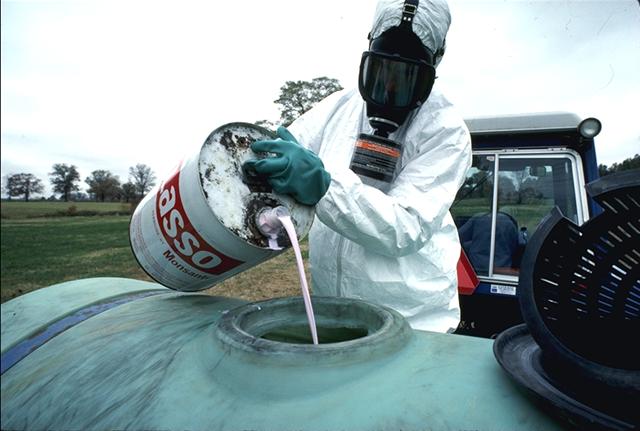
    Monsanto herbicide to be sprayed on food crops. (Photo from the USDA via Wikimedia Commons)
    Monsanto herbicide to be sprayed on food crops. (Photo from the USDA via Wikimedia Commons)
    (ANTIMEDIA) Sacramento, CA — California just dealt Monsanto a blow as the state’s Environmental Protection Agency will now list glyphosate — the toxic main ingredient in the U.S.’ best-selling weedkiller, Roundup — as known to cause cancer.
    Under the Safe Drinking Water and Toxic Enforcement Act of 1986 — usually referred to as Proposition 65, its original name — chemicals that cause cancer, birth defects, or other reproductive harm are required to be listed and published by the state. Chemicals also end up on the list if found to be carcinogenic by the International Agency for Research on Cancer (IARC) — a branch of the World Health Organization.
    In March, the IARC released a report that found glyphosate to be a “probable carcinogen.”
    Besides the “convincing evidence” the herbicide can cause cancer in lab animals, the report also found:
    “Case-control studies of occupational exposure in the U.S.A., Canada, and Sweden reported increased risk for non-Hodgkin lymphoma that persisted after adjustments to other pesticides.”
    California’s decision to place glyphosate on the toxic chemicals list is the first of its kind. As Dr. Nathan Donley of the Center for Biological Diversity said in an email to Ecowatch, “As far as I’m aware, this is the first regulatory agency within the U.S. to determine that glyphosate is a carcinogen. So this is a very big deal.”
    Now that California EPA’s Office of Environmental Health Hazard Assessment (OEHHA) has filed its notice of intent to list glyphosate as a known cancer agent, the public will have until October 5th to comment. There are no restrictions on sale or use associated with the listing.
    Monsanto was seemingly baffled by the decision to place cancer-causing glyphosate on the state’s list of nearly 800 toxic chemicals. Spokesperson for the massive company, Charla Lord, told Agri-Pulse that “glyphosate is an effective and valuable tool for farmers and other users, including many in the state of California. During the upcoming comment period, we will provide detailed scientific information to OEHHA about the safety of glyphosate and work to ensure that any potential listing will not affect glyphosate use or sales in California.”
    Roundup is sprayed on crops around the world, particularly with Monsanto’s Roundup-Ready varieties — genetically engineered to tolerate large doses of the herbicide to facilitate blanket application without harming crops. Controversy has surrounded this practice for years — especially since it was found farmers increased use of Roundup, rather than lessened it, as Monsanto had claimed.
    Less than a week after the WHO issued its report naming glyphosate carcinogenic, Monsanto called for a retraction — and still maintains that Roundup is safe when used as directed.
    On Thursday, an appeals court in Lyon, France, upheld a 2012 ruling in favor of farmer Paul Francois, who claimed he had been chemically poisoned and suffered neurological damage after inhaling Monsanto’s weedkiller, Lasso. Not surprisingly, the agrichemical giant plans to take its appeal to the highest court in France.
    It’s still too early to tell whether other states will follow California’s lead.
    This article (California Just Announced It Will Label Monsanto’s Roundup as Cancer Causing) is free and open source. You have permission to republish this article under a Creative Commons license with attribution to Claire Bernish andtheAntiMedia.org.

    Friday, September 23, 2016

    Bayer-Monsanto: A “Marriage Made in Hell”? (Re-Post from The Truth About Cancer)

    We are all aware of the recent takeover of Monsanto by Bayer.

    I found a posting at The Truth About Cancer...but I will be remarking upon certain information presented therein. If you are a reader of my work, it will come as no surprise.


    Bayer-Monsanto: A “Marriage Made in Hell”?


    Monsanto has agreed to be sold to Bayer for $56.5 billion − a deal worth a total of $66 billion when Monsanto’s debt is taken into account. The combined company would be the world’s largest seller of both seeds and agrichemicals.
    Monsanto, arguably the most loathed GMO company on the face of the earth, has been the subject of heated discussions for decades, especially in recent days as their top-selling product (RoundUp) contains glyphosate, which has been linked to cancer, autism, and respiratory sickness.
    Monsanto has lobbied widely and even filed lawsuits to prohibit labeling of GMO products and bury the World Health Organization’s report listing glyphosate as a probable carcinogen. If Monsanto joins forces with Bayer (one of the most hated Big Pharma companies in the world), the resulting “marriage made in hell” would be a drug-seed-pesticide company that controls almost 1/3 of the world’s seed market and almost ¼ of the pesticide market. Many would argue that this would equate to a monopoly. More on that topic later in the article.
    Bayer-Monsanto-Fox-News.jpg
    But this would not be the first time Monsanto and Bayer have teamed up. During the Vietnam War, both firms were involved in the development of Agent Orange. And both firms are currently involved in the GMO market today. Speaking of GMOs, I was watching Fox News Channel a couple of days ago and the “expert” being interviewed said that this was necessary in order to feed the world and that GMO foods are the only solution. WRONG!
    Apparently said “expert” is unfamiliar with the recent research, specifically the IAASTD Report, which is the most comprehensive report on the future of food and agriculture (sponsored by the World Bank and the UN, written by over 400 scientists and endorsed by 59 countries).
    In this report, they did not endorse GMOs as a solution to world hunger. In addition, genetic engineering has not significantly increased U.S. crop yields, according to the USDA and controlled comparative studies. As a matter of fact, many GMOs have lower yields than non-GMO crops. Did I mention that GMO crops have been linked to cancer and have numerous potential health risks?
    Let’s look at the sordid history of both of these companies…
    A Brief History of BAYER
    • Founded in Barmen, Germany in 1863 by Friedrich Bayer and his partner, Johann Friedrich Weskott.
    • During World War 1, Bayer turned its attention to the manufacture of chemical weapons including chlorine gas.
    • In 1925, Bayer, BASF, and Hoechst merged to form the massive German conglomerate Interessengemeinschaft Farben (IG Farben) which was the single biggest donor to Hitler’s election campaign.
    • IG Farben built the concentration camps at Auschwitz to supply slave labor for the nearby IG Farben plant (also known as IG Auschwitz). Hitler eventually used these same camps in his megalomaniacal attempt to exterminate the Jewish race.
    • In 1941, Otto Armbrust, the IG Farben board member responsible for IG Farben’s Auschwitz project, told his colleagues, “our new friendship with the SS is a blessing. We have determined all measures integrating the concentration camps to benefit our company.”
    • A subsidiary of IG Farben manufactured and supplied Zyklon B to the SS. This poisonous cyanide-based pesticide, on which IG Farben held the patent, was used during the Holocaust to annihilate more than 1,000,000 people in the concentration/extermination camps. IG Farben also supplied the SS with the Methanol used to burn the corpses.
    • In 1946, the Nuremberg War Crimes Tribunal concluded that without IG Farben the Second World War would simply not have been possible.
    Fritz-ter-Meer-Bayer.jpg
    • At Nuremberg, Fritz ter Meer (an executive of IG Farben) was convicted of slavery, mass murder, and crimes against humanity. After serving 5 years in prison, he became Chairman of the Board at Bayer in 1956, a position which he held for almost a decade.
    • In 1962, just fifteen years after they were convicted in the Nuremberg War Crimes Tribunal, Bayer, BASF and Hoechst were again the architects of the next major human rights offence when they established the Codex Alimentarius Commission.
    • In the mid-1980s, Bayer was one of the companies which sold a product called Factor VIII concentrate to treat hemophilia. Factor VIII turned out to be infected with HIV. After learning that the product was contaminated, in order to save money, Bayer continued selling this infected product to Asia and Latin America even though a safe product was available. Dr. Sidney M. Wolfe, who investigated the scandal, commented, “These are the most incriminating internal pharmaceutical industry documents I have ever seen.”
    • In the 1990s, the federal government launched an investigation on Bayer’s unethical billing practices on Medicaid program and the Department of Justice found Bayer guilty of fraud. Bayer had to pay $14 Million to settle charges of causing inflated Medicaid claims.
    Michelle-Pfleger-1.jpg
    • Yaz (approved by FDA in 2006) and Yasmin (2001) were revolutionary birth control pills that use a synthetic hormone called drospirenone (DSP). Yaz or Yasmin have led to hundreds of deaths in young and healthy women.
    • The drug Trasylol was banned in 2006 after it contributed to thousands of deaths in patients every single month for over a decade. After a 2006 study showed widespread deaths associated with Trasylol, it took FDA and Bayer almost two years to take the drug off of the market. Later on it was revealed that Bayer had buried evidence of Trasylol’s severe side effects.
    • In 2008, the German Coalition against Bayer brought a charge against the Bayer Board of Management, with the public prosecutor in Freiburg accusing Bayer of contributing to the mass death of bees all over the world through its aggressive pesticide marketing. Since then, the bee debacle has only grown worse, with thousands of hives collapsing after poisoning by the pesticide clothianidin, producing a worldwide crisis.
    Thanks to this website and this website for much of the above information.
    MONSANTO’S Poisonous Past
    • Monsanto was founded in 1901 in St. Louis, Missouri, by John Francis Queeny, a 30-year veteran of the pharmaceutical industry. Its first product was the artificial sweetener Saccharin, which Monsanto sold to the Coca-Cola Company.
    • In the 1920s, Monsanto Chemical Company was founded and incorporated the town of Monsanto, later renamed Sauget, Illinois. For years, the Monsanto plant in Sauget was the nation’s largest producer of polychlorinated biphenyls (PCBs), which were banned in the 1970s. PCBs are potent carcinogens and have been implicated in reproductive, developmental and immune system disorders. According to thousands of pages of released Monsanto documents (many of them emblazoned with warnings such as “CONFIDENTIAL: Read and Destroy”), they knew about the PCB dangers from early on, but decided to conceal what they knew. One Monsanto memo explains their justification: “We can’t afford to lose one dollar of business.”
    • During World War II, Monsanto played a significant role in the Manhattan Project to develop the atom bomb.
    • In 1944, Monsanto began manufacturing DDT, which was banned in 1972.
    • Following World War II, Monsanto championed the use of chemical pesticides in agriculture, and began manufacturing the herbicide 2,4,5-T, which contains dioxin. During the Vietnam War, the U.S. military initiated an herbicidal warfare program using Agent Orange (a mixture of 2,4,5-T and 2,4-D and had very high concentrations of dioxin) as a defoliant.
    agent_orange_march_veterans-for-peace.jpg
    Monsanto and Dow Chemical were the two largest producers of Agent Orange, which has been linked to cancer and birth defects. According to the Vietnamese Ministry of Foreign Affairs, 4.8 million Vietnamese people were exposed to Agent Orange, resulting in 400,000 deaths and disabilities, plus 500,000 children born with birth defects, leading to calls for Monsanto to be prosecuted for war crimes. Internal Monsanto memos show that Monsanto knew of the problems of dioxin contamination of Agent Orange when it sold it to the U.S. government for use in Vietnam.
    • In 1973, Monsanto developed and patented the glyphosate molecule and began manufacturing Roundup. In 2015, the World Health Organization declared glyphosate to be a probable carcinogen. Despite this fact, Roundup is still marketed as “safe.”
    • In 1982, Monsanto genetically modified a plant cell for the first time.
    • In the mid-1980s, Monsanto purchased G.D. Searle, the chemical company that held the patent to aspartame, the active ingredient in NutraSweet. Monsanto was apparently untroubled by aspartame’s clouded past, including a 1980 FDA Board of Inquiry, comprised of three independent scientists, which confirmed that it “might induce brain tumors.” The aspartame business became a separate Monsanto subsidiary, the NutraSweet Company.
    • In the late-1980s and early-1990s, Monsanto spent almost $500,000 to defeat Proposition 65 (California’s anti-toxics initiative which prohibited the discharge of chemicals known to cause cancer or birth defects into drinking water supplies) and Proposition 128 (California’s pesticide regulation initiative that would have phased out Monsanto’s product alachlor, which is linked to cancer). During the same time period, Monsanto also conducted the first field tests of genetically engineered (GMO) crops.
    • In 1991, Monsanto was fined $1.2 million for trying to conceal discharge of contaminated waste water into the Mystic River in Connecticut.
    • In the mid-1990s, Monsanto developed their controversial cattle drug, recombinant bovine growth hormone (rBGH or rBST), which is produced through a genetically engineered E. coli bacteria.
    • During the same time period, Monsanto was ranked 5th among U.S. corporations in EPA’s Toxic Release Inventory, having discharged 37 million pounds of toxic chemicals into the air, land, water and underground. Monsanto was ordered to pay $41.1 million to a waste management company in Texas due to concerns over hazardous waste dumping.
    • In 1996, Monsanto introduced “Roundup Ready Soybeans” and “BT Cotton” then in 1998 “Roundup Ready Corn” was introduced.
    • By 2007, Monsanto’s GMO seeds accounted for over 90% of the world’s supply.
    • In 2010, former Monsanto lobbyist Michael R. Taylor was appointed as Deputy Commissioner of Food Safety at the FDA (the fox is guarding the henhouse).
    • Since 2012, Monsanto has spent more than $25 million to fight state ballot initiatives to label GMOs and millions more to lobby Congress against mandatory GMO labeling.
    Thanks to this website for much of the above information.
    Bayer Monsanto Union: A Dark and Dangerous Threat
    The above bullet points about Bayer and Monsanto are merely the tip of the iceberg. I could have written an entire book detailing the unscrupulous activities that these companies have engaged in over the past century. But I think you get the point. This “hidden” history of Bayer and Monsanto indicates that both of these companies have consistently been involved with malevolent endeavors that wreaked havoc on humanity and caused sickness, pain, and death on a massive scale. These companies are like a cancer eating away at the physical fabric of our world.
    If these two companies join forces, the dark and dangerous synergy and malignant power will metastasize and be so great that, figuratively speaking, the universe might explode! To use a Lord of the Rings analogy, it would be like Sauron acquiring the One Ring.
    Will this merger actually happen? It’s hard to say. Thankfully, there are anti-trust laws in place that will force the entire deal to undergo tremendous scrutiny and lengthy regulatory processes in the USA as well as the EU. “This merger is not a slam dunk,” said Diana Moss, president of the American Antitrust Institute. Also, a legal opinion written by two former Department of Justice officials (Antitrust Division) argues that the merger would violate the Clayton Act and would also be in direct violation of a 2008 court order.
    March-Against-Monsanto.jpg
    A Bayer-Monsanto merger certainly threatens the world food supply with domination by GMOs and destructive, carcinogenic agrochemicals. Thanks primarily to the anti-GMO and “Millions Against Monsanto” movements, the behemoth biotech bully is on the ropes.
    Perhaps Monsanto thinks that if it changes its name, that we will forget its poisonous past. Think again Monsanto.
    On October 14-16, Monsanto’s crimes against humanity will be exposed at the Monsanto Tribunal in The Hague, Netherlands.
    Remember, all it takes for evil to prevail is for good men to do nothing. We must stick together and help educate our neighbors in order to continue the good fight together… for our children and every future generation to come.
    Perhaps it’s time to put Bayer and Big Pharma on trial as well and build an even bigger worldwide unified assembly. Maybe we could call it “Billions Against Big Pharma and Bayer-Monsanto.”
    Please share this important news story with friends and family and together let’s all take action to stop this merger.
     Now, I believe the article is mostly factual, with great information...but one aspect of it doesn't wash.

    The claim that I.G. Farben was "instrumental" in World War Two hinges on the soon to be discredited story of the homicidal gas chambers, which, if proven to not have existed, puts the lie to the main reason as to why we needed to intervene in that debacle.

    I welcome discussion; ad-hominem attacks, however, will be met as they always have - with the full force of my keyboard.

    Wednesday, July 20, 2016

    You Can't Hide Your Lying Lies


    I'd like to thank Campbell's and Applegate Farms for correctly embracing the labeling initiative.

    However, I'll bet you didn't know that Entenmann's has also indicated on their packaging that they have products "PARTIALLY PRODUCED WITH GENETIC ENGINEERING".

    I'd like to contact them and find out exactly what that entails. Is it the wheat? Eggs? Soy flour? Butter? Coconut flour? Or is it all of the aforementioned? It's just that these ingredients are all listed in bold, along with the admission statement.

    Get a copy of Dr. Richard Jacoby's Sugar Crush.

    Found a new blog, Beyond Pesticides - here's an alarming piece:

    Glyphosate Causes Changes to DNA Function Resulting in Chronic Disease, According to Study

    (Beyond Pesticides July 18, 2016) A review of the scientific literature links glyphosate, one of the most popular weed killers in the U.S. and the active ingredient in Roundup, to a wide range of diseases through a mechanism that modifies DNA functioning, adding a new even more troubling dimension to the herbicide’s cancer classification by the International Agency for Research on Cancer. According to the most recent review, Glyphosate pathways to modern disease V: Amino acid analogue of glycine in diverse proteins, conducted by independent scientists Anthony Samsel, Ph.D. and Stephanie Seneff, Ph.D., a scientist at Massachusetts Institute of Technology (MIT), glyphosate acts as a glycine analogue that incorporates into peptides during protein synthesis. In this process, it alters a number of proteins that depend on conserved glycine for proper function. According to the authors, glyphosate substitution for glycine correlates with several diseases, including diabetes, obesity, asthma, Alzheimer’s disease, amyotrophic lateral sclerosis (ALS), and Parkinson’s disease, among others.

    Glycine, the smallest amino acid commonly found in proteins, has unique properties that support flexibility and the ability to anchor to the plasma membrane or the cytoskeleton. This new direct biological evidence, taken together with correlational data, make a compelling case that glyphosate action as a glycine analogue accounts for much of glyphosate’s toxicity, according to the study. The authors find that glyphosate, as an amino acid analogue of  glycine, may  be  incorporated into polypeptide chains during protein synthesis. In doing so, it has an impact on the structure and function of the proteins. Proteins fold up, and glycine is a small molecule that is often found at the folding places. Since glyphosate is much larger, it prevents the protein molecule from folding properly, leading to the disruption of function of many  proteins with essential roles in metabolism and regulatory processes.
    The article cites a number of ways that this affects humans and other organisms. According to the study, the consequences of this action can lead to impaired fatty acid release leading to obesity, impaired insulin receptor response leading to diabetes, impaired one-carbon metabolism leading to neural tube defects and autism, impaired cell cycle control during DNA synthesis, and disregulated phosphorylation cascades leading to cancer, lung disorders, and autoimmune diseases.
    Stephen Frantz, Ph.D., a pathobiologist research scientist explains it like this: “When a cell is trying to form proteins, it may grab glyphosate instead of glycine to form a damaged, mis-folded protein. After that it’s medical chaos. Where glyphosate replaces glycine, the cell can no longer conduct business as usual causing unpredicted consequences with many diseases and disorders as a result.”
    The release of this study comes on the heels of several other discussions and actions on glyphosate that have taken place over the past few weeks. Last month at a Congressional briefing sponsored by U.S Representative Ted Lieu, a delegation of independent scientists including this study’s authors, presented their findings, urging lawmakers to call on the EPA to ban RoundUp, Monsanto’s flagship herbicide. Beyond Pesticides participated on the panel, providing testimony on the impact of glyphosate on soil systems, as well as the unreasonable risk it poses to humans, animals, and the environment. Following the congressional briefing, scientists spoke at a closed meeting with the Environmental Protection Agency (EPA), explaining the biochemical and physiological reasons why exposure to glyphosate, the active ingredient in RoundUp, is linked to autism, Alzheimer’s, cancer, birth defects, obesity, and gluten intolerance, among other health issues. EPA’s Office of Pesticide Programs’ Deputy Director and his staff met with the panelists and provided an overview of EPA’s registration process for glyphosate. EPA staff had some interest in the information presented, which was forwarded to relevant staffers. However, EPA indicated that much of the information provided may not impact their current risk assessment for glyphosate, which is expected sometime in 2017.
    Glyphosate, created by Monsanto, is touted as a “low toxicity” chemical and “safer” than other chemicals by industry. But glyphosate has been shown to have detrimental impacts on humans and the environment. Given its widespread use on residential and agricultural sites, its toxicity is of increasing concern. In early 2015, glyphosate was classified by the World Health Organization’s (WHO) International Agency for Research on Cancer (IARC) of as a “probable human carcinogen.” Just a few months later, a study published in Environmental Health News found that chronic, low-dose exposure to glyphosate led to adverse effects on liver and kidney health. Roundup formulations can also induce a dose-dependent formation of DNA adducts (altered forms of DNA linked to chemical exposure, playing a key role in chemical carcinogenesis) in the kidneys and liver of mice. Human cell endocrine disruption on the androgen receptor, inhibition of transcriptional activities on estrogen receptors on HepG2, DNA damage and cytotoxic effects occurring at concentrations well below “acceptable” residues have all been observed.
    Roundup also harms crops’ ability to capture carbon from the air, an important factor in fighting climate change. “Glyphosate negatively affects the soil microbiome,” said Frantz. “It is destroying the ability of soil to be a nutritive medium for producing crops. Organic or biological regenerative agriculture is the solution for the sustainable agricultural sector and will conserve soil, air and water quality, and sequester carbon that helps to mitigate the climate crisis. We call for a ban on glyphosate.”
    Beyond Pesticides urges individuals concerned about glyphosate exposure to support organic systems that do not rely on hazardous carcinogenic pesticides. In agriculture, concerned consumers can buy food with the certified organic label, which not only disallows synthetic pesticides like glyphosate, but also the use of sewage sludge and genetically engineered ingredients. Beyond Pesticides also urges the adoption of organic lawn and landscape programs.
    All unattributed positions and opinions in this piece are those of Beyond Pesticides.
    Monsanto is daring to sue the state of California for informing the populace that Roundup is a carcinogen?


    Monsanto on Thursday stepped up its defense of Roundup, a widely used weed killer, by filing a lawsuit in California seeking to prevent glyphosate, the main ingredient in the herbicide, from being added to the state’s list of known carcinogens. The company said it filed the suit against the state’s Office of Environmental Health Hazard Assessment and the agency’s acting director, Lauren Zeise, in California state court. The state agency said in September that it planned to add glyphosate to the list after the World Health Organization’s International Agency for Research on Cancer classified it as a probable human carcinogen last March. Monsanto has disputed the assessment, citing numerous studies deeming glyphosate safe. In its lawsuit, Monsanto describes the International Agency for Research on Cancery as an “unelected, undemocratic, unaccountable and foreign body.” It says that the lack of oversight violates the company’s right to procedural due process under state and federal law. The agency did not comment, as it had not seen the suit. Roundup is used by farmers worldwide and generated $4.8 billion in revenue for Monsanto in the 2015 fiscal year. Questions about the safety of the herbicide have dogged Monsanto for years.
    Correction: January 26, 2016 
    Because of an editing error, a report in the Company Briefing column on Friday about a lawsuit in California by Monsanto, which seeks to prevent the main ingredient in its Roundup weed killer from being listed as a known carcinogen, misidentified the organization that the company described as an “unelected, undemocratic, unaccountable and foreign body.” It is the International Agency for Research on Cancer, a World Health Organization agency that classified the chemical as a probable human carcinogen last March — not the California Office of Environmental Health Hazard Assessment, which is the target of the lawsuit.

    Monday, March 14, 2016

    When Monsanto Loses, We All Win! (Re-Posts from Thrive Market and Natural Society)

    A couple of quick postings:


    New Report Delivers a Blow to Monsanto and Its Most Widely Used Herbicide


    New Report Delivers a Blow to Monsanto and Its Most Widely Used Herbicide

    by for Thrive Market
    Ask 10 people on the street about Monsanto, and chances are seven or eight of them will respond with some variation of, “they make the toxic chemicals that we don’t want on our food” or “they genetically modify our food system.”

    Tuesday, January 26, 2016

    Monsanto sues California, says its ‘undemocratic’ for listing glyphosate as a carcinogen (Re-Post from NewsTarget)

    Monsanto sues California, says its ‘undemocratic’ for listing glyphosate as a carcinogen

    Image: Monsanto sues California, says its ‘undemocratic’ for listing glyphosate as a carcinogen
    One of the world’s most hated companies, Monsanto, is like a bull in a china shop, angrily destroying everything in its path, including people and the resources we need so desperately to survive. Monsanto’s Roundup, for which the primary ingredient is glyphosate, is one of the most widely used herbicides. Over the last two decades, 2.6 billion pounds of glyphosate was sprayed on U.S. crops.
    However, last year was a major milestone for public health when the World Health Organization boldly announced that glyphosate was “probably” carcinogenic. Since then, government regulatory agencies all over the world have taken steps to limit and/or properly label the ingredient’s toxic effects on people.
    Under Calif. law, the state is required to maintain a list of cancer-causing chemicals to serve as a safety guideline for residents. Proposition 65 – the Safe Drinking Water and Toxic Enforcement Act – requires listed chemicals not be dumped into sources of drinking water. Proper warnings must also be labeled on products containing cancer-causing chemicals.(1)

    Monsanto may be prevented from dumping toxic herbicide into Californians’ water supply

    Following the WHO’s declaration, the Golden State naturally moved to add Monsanto’s glyphosate to its list of cancer-causing toxins.
    But Monsanto is having none of it.
    The seed giant filed a lawsuit against the state’s Office of Environmental Health Hazard Assessment (OEHHA) and the agency’s acting director Lauren Zeise on Thursday, seeking to prevent Calif. from listing Roundup’s main ingredient as a carcinogen.
    Refusing to back down from their product, Monsanto insists glyphosate is safe, pointing to decades of studies. However, the biotech giant’s so-called “studies” are no longer credible after it was exposed for faking safety tests glyphosate nearly four decades ago.
    The revelations emerged after two independent scientists gained access to Monsanto’s secret toxicology studies on glyphosate, after which they discovered the company purposely withheld evidence of tumors caused by the chemical.

    Monsanto faked safety tests on glyphosate 40 years ago

    They concealed the health impacts of glyphosate by diluting their data with irrelevant information from unrelated studies.
    “Monsanto included irrelevant historical control data from other experiments ‘to create doubt and obscure the statistical significance of inconvenient findings, which may have prevented product registration,’” reports GMO.news.(2)
    The independent scientists concluded that had Monsanto not faked their safety trials, glyphosate may never have been approved for use in the first place.
    Despite evidence of fraud and the WHO’s conclusion, Monsanto’s Vice President Phil Miller insists that glyphosate is safe and that there is “not a sound basis for any regulatory action.”
    According to Reuters, Monsanto’s lawsuit alleges that listing glyphosate under Prop 65 “cedes regulatory authority to an ‘unelected, undemocratic, unaccountable, and foreign body’ that is not subject to oversight by any state or federal entity.”(3)
    Monsanto says the Prop 65 mandate to provide consumers with a “clear and reasonable warning” about cancer-causing chemicals is a violation of its First Amendment rights and subsequently damages its reputation.
    Monsanto’s “reputation” however, has been damaged for quite some time. It earned the ominous title of being the world’s “most evil corporation” in 2013 and since then has remained high on the list. Last year, it was voted the fourth most hated corporation, beat by Goldman Sachs, AIG and Dish Network.(4,5)

    International Tribunal to hold Monsanto accountable for its crimes against humanity

    Using a set of guidelines implemented by the UN to protect individuals from human rights abuses committed by states and corporations, a group of individuals will hold an international tribunal that “is set to hold the world’s most evil corporation, Monsanto, accountable for its crimes against nature and humanity,” Natural News reported.(6)
    Scheduled for Oct. 12–16 in the Hague, Netherlands, the Monsanto Tribunal will evaluate the health and environmental damage caused by a list of products made by the seed giant.(7)
    Roundup is included on the list, along with PCBs, Lasso (a weed killer now banned in Europe) and 2,4,5,T, “a dioxin-containing component of the defoliant, Agent Orange, which was used by the US Army during the Vietnam War and continues to cause birth defects and cancer.”
    Click here to learn more about the Monsanto Tribunal.
    Sources:
    (1) Scorecard.GoodGuide.com
    (2) GMO.news
    (3) Reuters.com
    (4) IBTimes.com
    (5) Bloomberg.com
    (6) NaturalNews.com
    (7) Monsanto-Tribunal.org
    (8) DailyFinance.com
    (9) Independent.co.uk
    (10) EcoWatch.com
    _____________________


    I did some bolding of text to enhance a number of points in the article.


    Isn't it against the First Amendment to engage in stifling of information intended to inform the public of a compelling and/or impending danger? Is Monsanto kidding us?


    They don't even ingest their own FrankenFoods!


    What's Served In Monsanto's Cafeterias?


    It's time to put these asshats out of their misery.